Role
Client
Date
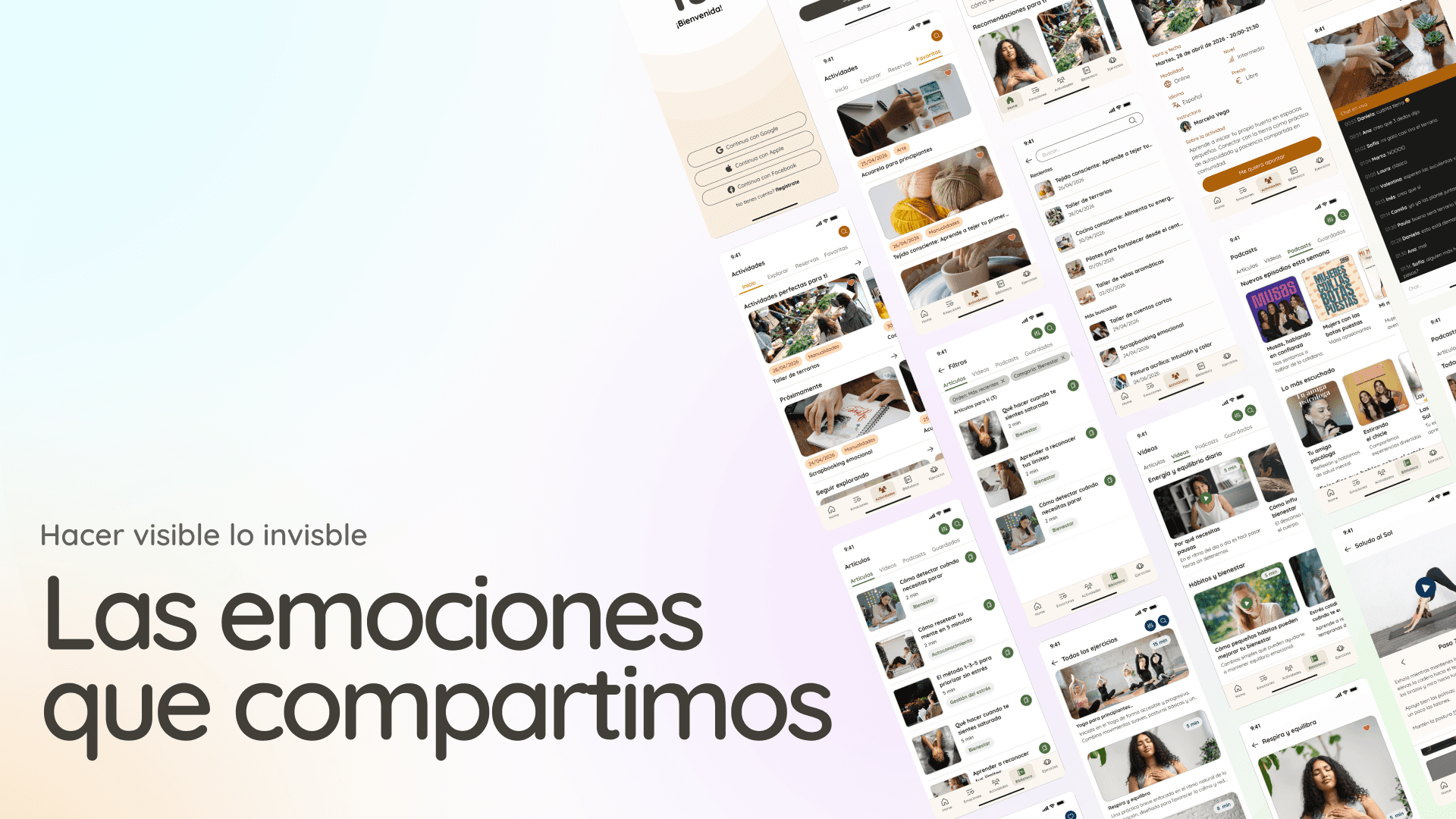
Many women live in a constant state of emotional overload—balancing work, responsibilities, and care.
Research showed a clear pattern:
They recognize how they feel, but act too late
They lack tools to regulate emotions in the moment
Existing solutions are fragmented (wellness, social, or content—but not all together)
The real problem wasn’t awareness.
It was the lack of accessible support at the right moment.
Research
We combined:
Interviews and surveys
Market analysis
User journey mapping
Key insights:
Constant emotional overload
High self-demand and late regulation
Need for a safe, judgment-free space
Simple actions (not content) are what actually help
We defined our core user:
Clara, 32
High responsibility, high stress
Aware of her emotions, but reacts too late
Needs clarity, simplicity, and support—not more information
The Strategy
How might we help users move from emotion → action, before reaching burnout?
We focused on:
Reducing cognitive load
Supporting emotional awareness and action
Designing a system that feels safe, simple, and human
Testing & Iteration
User testing revealed critical issues:
Confusion in navigation and filters
Cognitive overload in key flows
Lack of clarity in features like the emotional map
We simplified:
Navigation and structure
Filters and search
Visual hierarchy and guidance
Result:
Clearer flows
Less friction
More confident interaction
Key Design Decisions
Clarity over complexity → simplified flows and screens
Guided experience → decisions appear progressively
Personalization → content adapts to emotional state
Community as core → not a feature, but the foundation
Privacy & safety → essential for emotional products
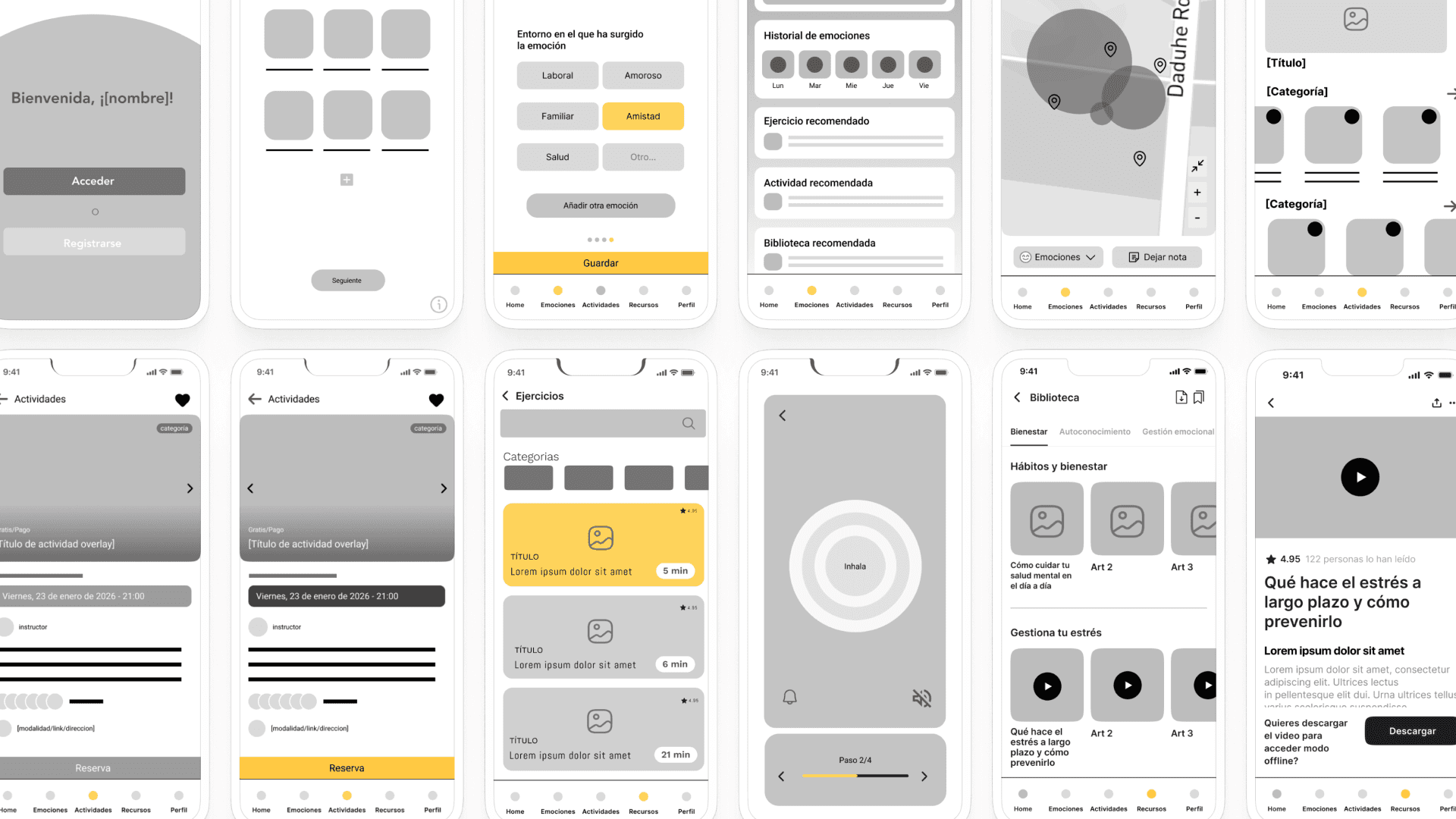
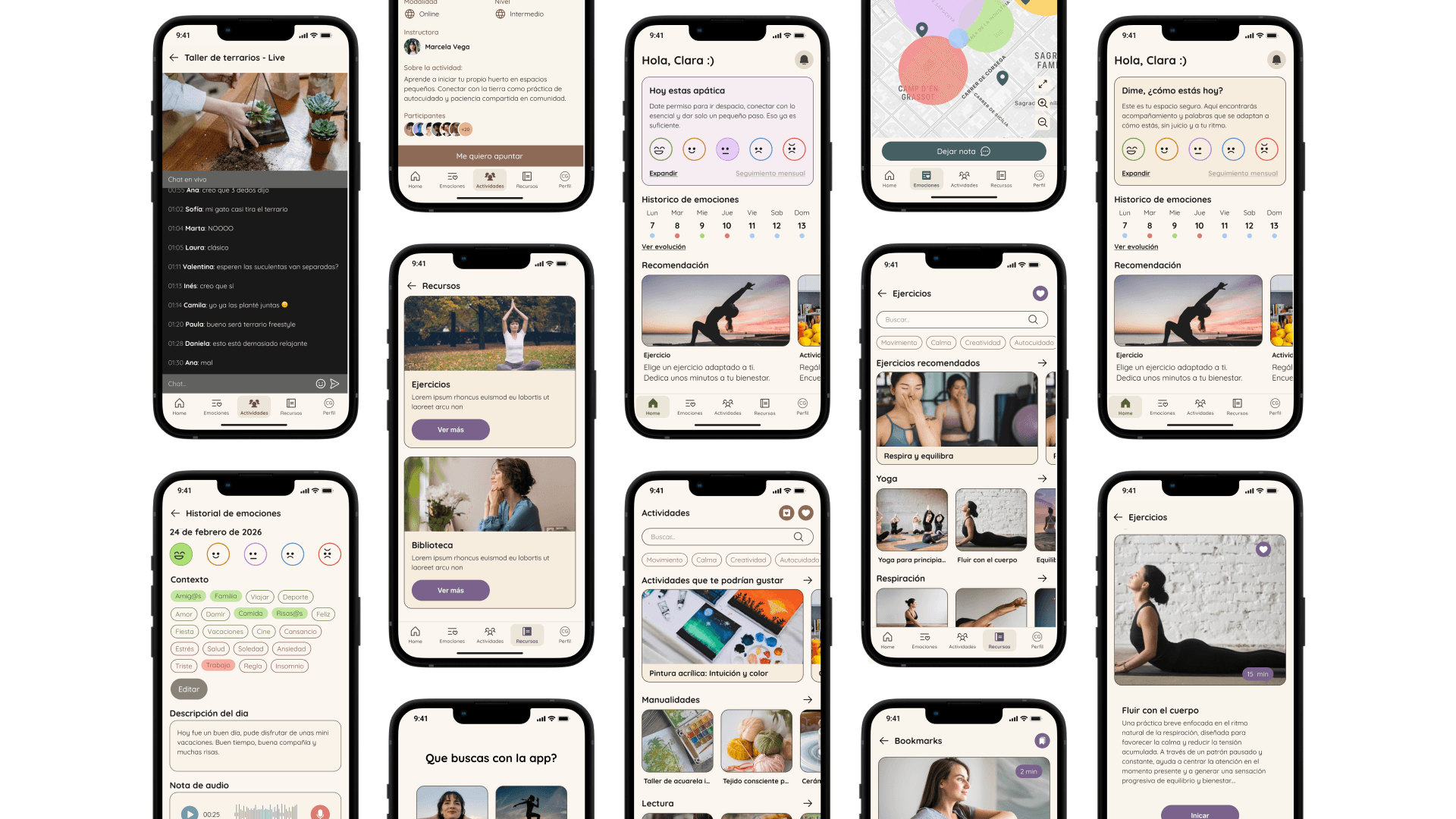
A mobile app that connects emotion, community, and action in one experience.
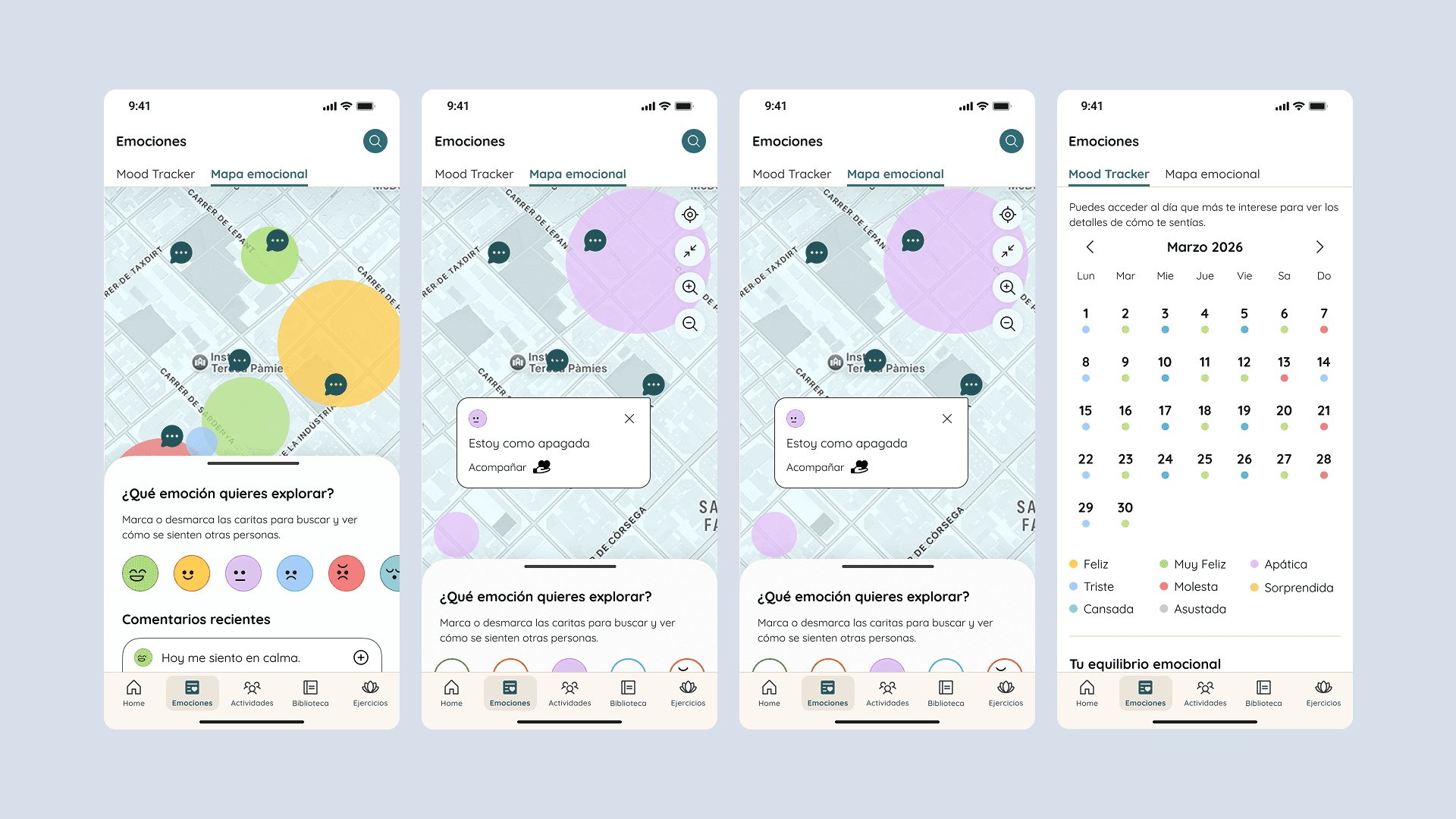
1. Mood Tracker (Awareness)
Simple emotional check-ins
Pattern visualization over time
Helps users understand what they feel
2. Emotional Map (Connection)
See how others feel in real time
Anonymous participation
Reduces isolation and builds community
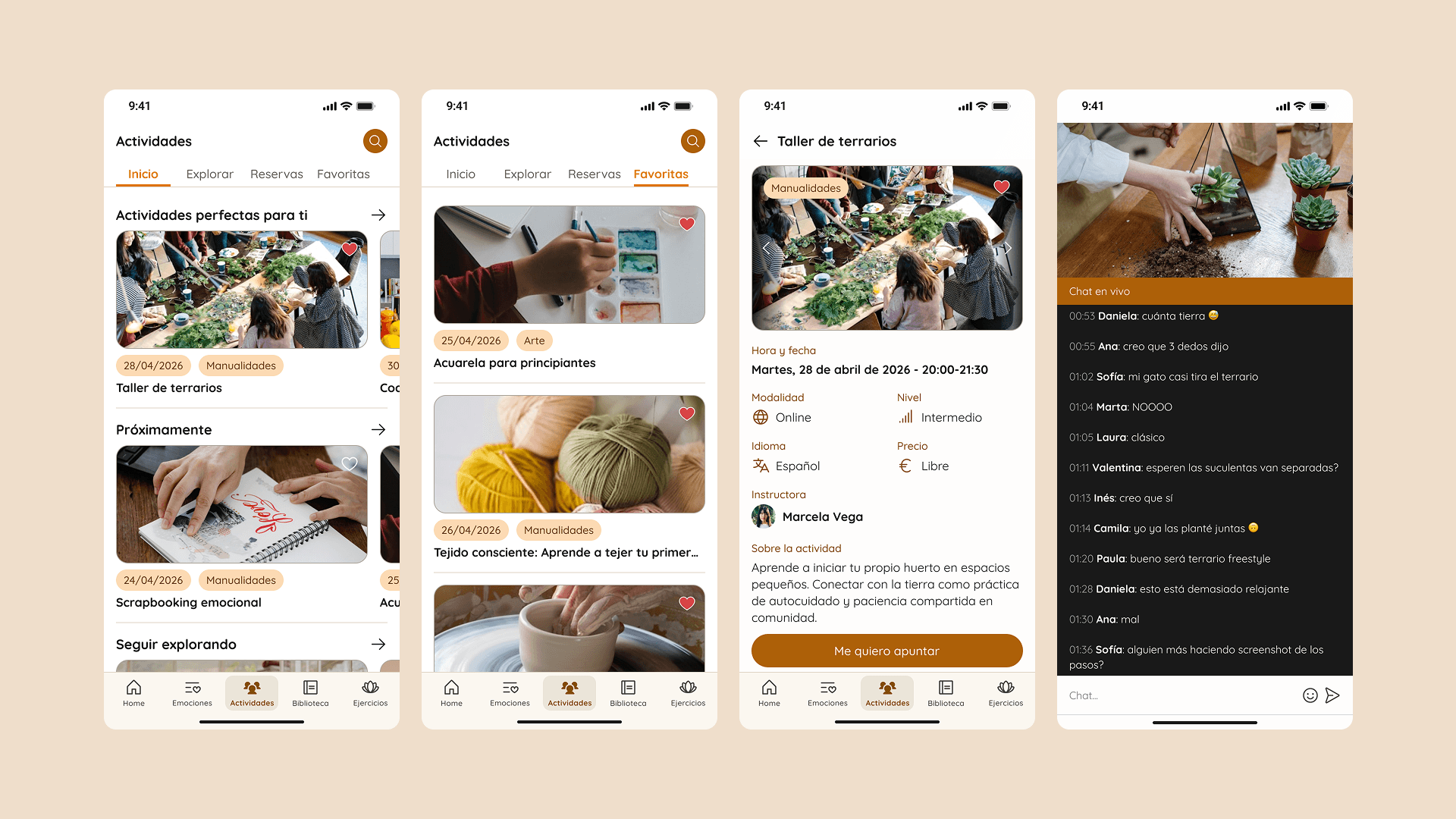
3. Activities (Action)
Personalized workshops and sessions
Easy booking flow
Turns emotion into action
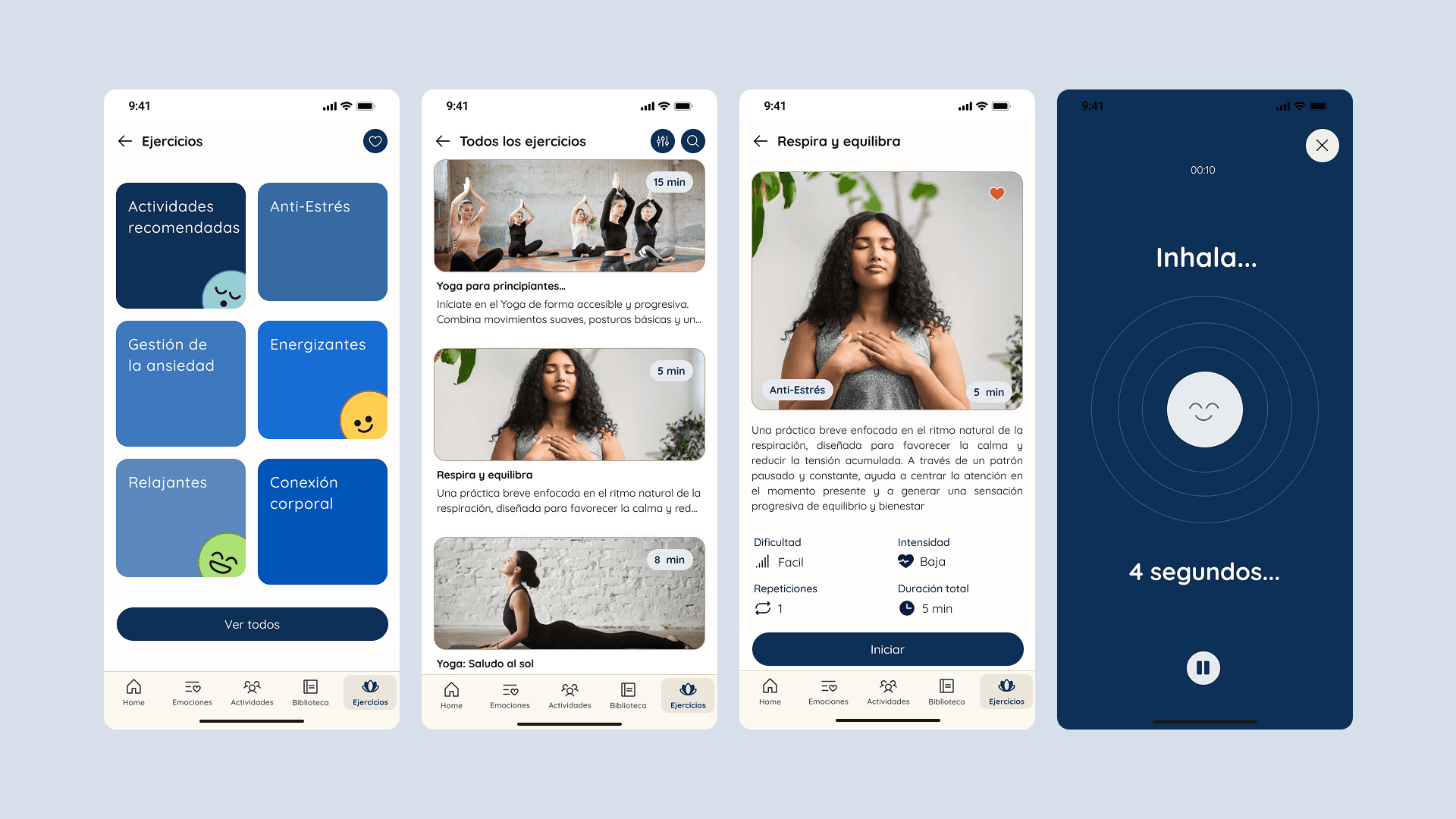
4. Exercises (Immediate Support)
Quick tools (breathing, relaxation, etc.)
“Emotional first aid kit” when needed
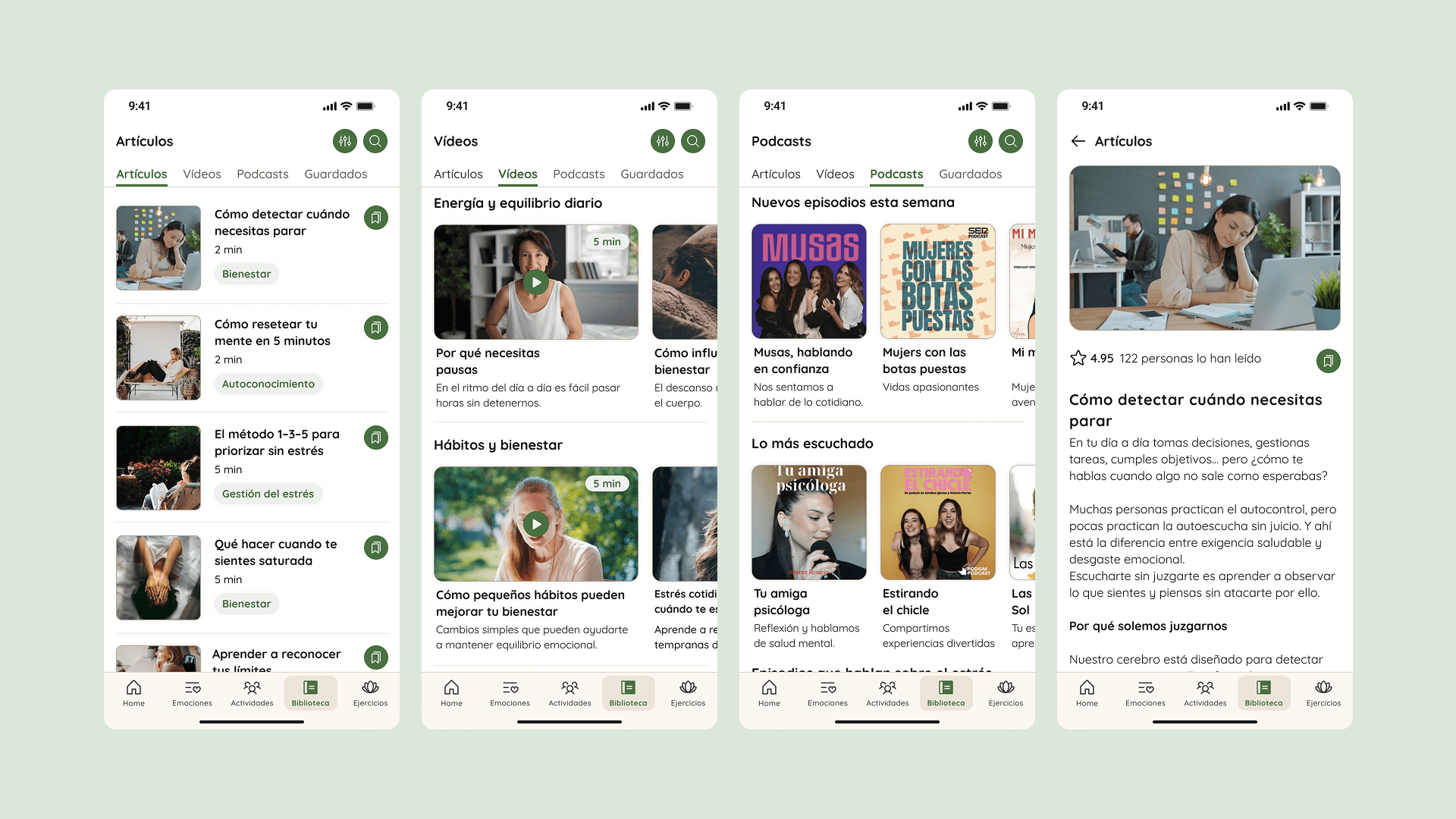
5. Resource Library (Learning)
Articles, videos, podcasts
Supports long-term understanding
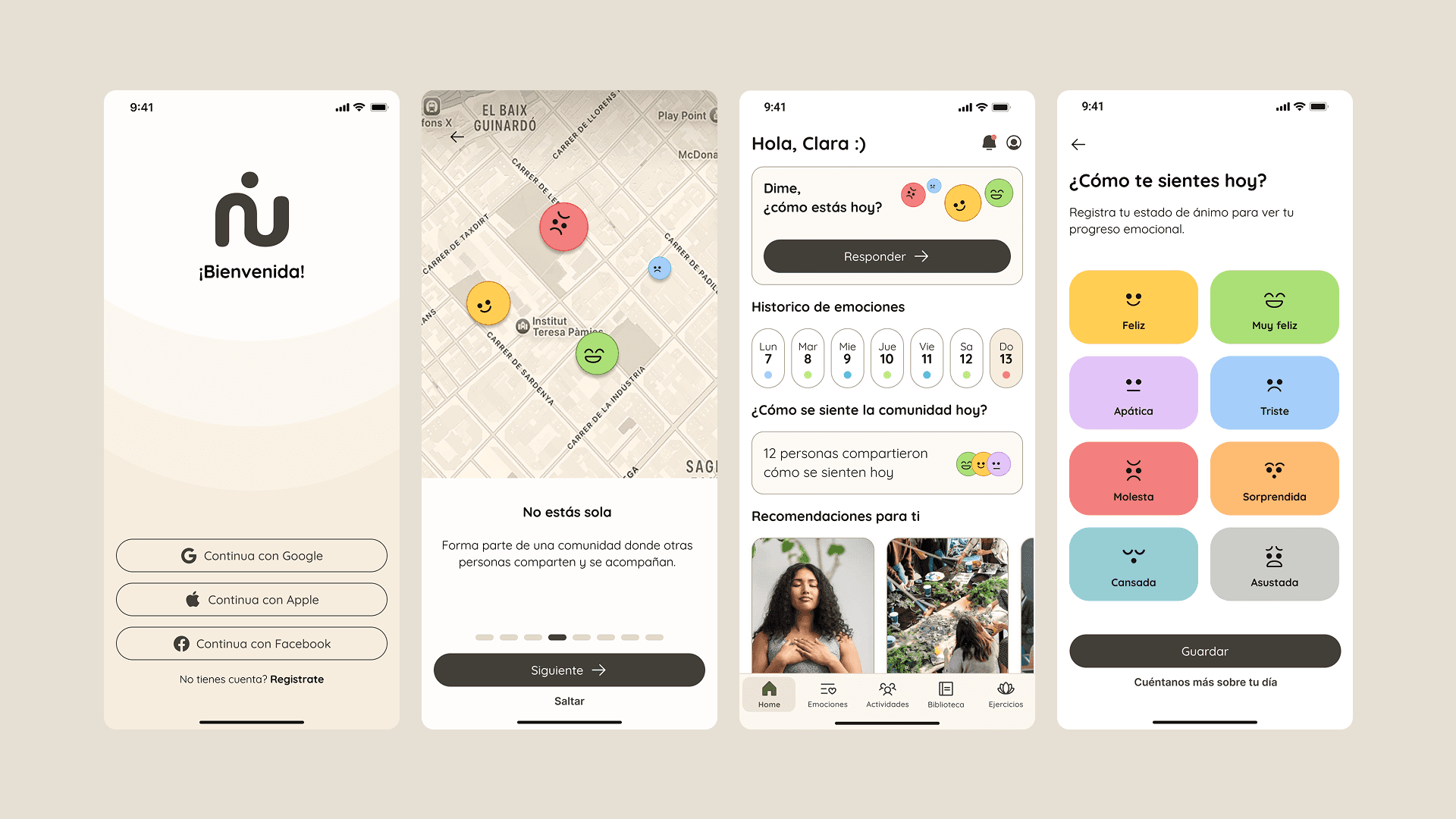
Reduced decision fatigue through personalization
Increased engagement with relevant recommendations
Created a more supportive and human-centered experience
The product evolves from a tracker → to a real emotional support tool
Awareness alone is not enough—users need actionable support
Simplicity is critical in emotionally sensitive contexts
Community can be a powerful tool for healing
UX is not just usability—it’s emotional experience design